Last week I was close to what is probably the largest concentration of datacenters anywhere in the world, so I figured I could go and see some during my weekend run1. To do this I asked Claude to draw me a 21K starting and finishing at the Ashburn silver line station2 that would pass by as many data centers as possible including the location of Wikimedia’s main (eqiad) datacenter that is located in Ashburn. Claude obliged with a suggestion for a route that contained 59 data centers - for some reason, involving GPS inaccuracies it later turned out to be 24K covering 64 data centers.
The sightseeing itself was excellent, if you like windowless boxes. They range from brand-new four-storey giants to smaller ones that seem to have been around for a while. Most of the ones in the area belong to Amazon, and those also tend to have the most (visible) security. I was yelled at by a security guard once for taking photos, but that was it. What was most striking is how empty the place otherwise is. I saw almost no other people: lots of deserted parking lots and a disproportionate amount of landscaping and neatly trimmed grass. It feels as if the newer buildings have to include public green space in their plans3, although nobody seems to be in need of hanging out in a park dominated by the permanent hum of the cooling systems.
park bench in front of the CyrusOne NVA7 data center
For a few years now, Ashburn has been the terminus of the Silver Line of the DC Metro, which gets you out there for a mere $2.50, although it costs you about 80 minutes of your life. ↩︎
In a similar vein, the newer data centers all have paved pedestrian paths along the roads, while the older ones don’t. That makes for a pretty poor running experience, with lots of paths ending halfway along a stretch of road. But then again, I did not see a single other pedestrian or runner during my entire run. ↩︎
Among the EU institutions, the EUIPO - short for European Union Intellectual Property Office - is probably one of the less visible ones. Originally founded as the Office for the Harmonization of the Internal Market (OHIM), its main function is to issue EU trade marks, but its remit is slowly expanding and increasingly covers activities related to copyright. This is how I found myself spending the last two days at the sprawling EUIPO campus overlooking the Mediterranean Sea just outside Alicante, which is one of the strangest places that I have come across in my life.
EUIPO perimeter fence (click for more)
To understand the place, one needs to understand that issuing EU trademarks is a very lucrative business, which makes the EUIPO a very well-funded institution. Over the years, this wealth has found an expression in the form of an infrastructural cocoon that encapsulates a word class conference facility with some of the best views of any such place I have ever been to. There is a giant balcony with an undisturbed view across the Mediterranean - overlooking the budget hotels that house the continent’s traveling trademark lawyers coming to plead their clients’ cases in front of the Boards of Appeal.
Then there is the imposing perimeter fence, topped by arrays of CCTV cameras that would not feel out of place surrounding an embassy compound in a failed state - complete with armed security guards. And finally, there is the manicured on-campus forest, equipped with permanently installed water cannons at the ready to respond to the ever-present danger of careless conference-goers overlooking the numerous no-smoking signs neatly arranged between the pine trees.
Something about this carefully insulated atmosphere - both lavish and hermetically sealed - invites a different register of thinking. Spending two days in this place, as part of the temporarily displaced Brussels copyright policy bubble, made my mind wander back to ideas about non-places, temporary autonomous zones, and post-structuralist French philosophy. Who would have thought that these ideas could coexist with a conference experience that, in its peculiarly engineered way, ended up being genuinely enjoyable?
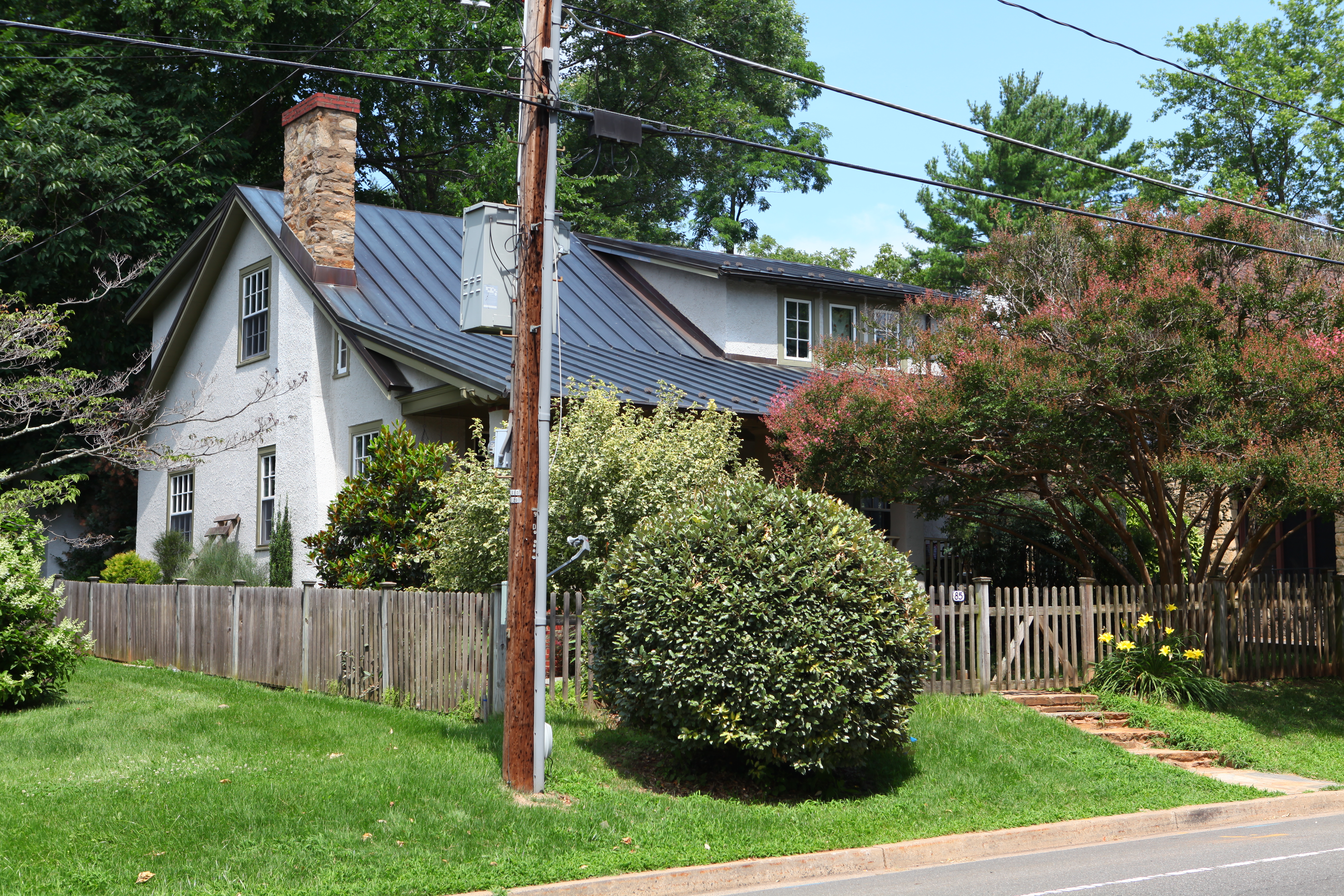
On the 16th of July 2015, a couple of hours before flying back to Amsterdam i rented a car in downtown Washington D.C and drove for a about an hour to Warrenton, VA to take a photo of a residential property located on one of the main thouroughfares of the small town:
85 Waterloo Street Warrenton VA 20186, USA
So what triggered my interest in this rather unremarkable building in an unremarkable town? The house on Waterloo Street was home to HCR international, a company that since 1998 has been managing the copyright in the works of the Dutch born artist Piet Mondrian (1872 - 1944). As a result the name of the company featured prominently in the copyright notices alongside reproductions of the works of Mondrian on Museum websites and exhibition catalogues all over the world.
I had developed an interest in HCR international when we were working on the “Wiki loves Art/NL” publication in 2010. During the work on the book i became aware of the somewhat dubious reputation that a certain Hillary Richardson (presumably the H and the R in HCR international) had among museum curators who dealt with works by Piet Mondriaan. Apparently Ms Richardson was rather demanding when it came to providing permission for preproductions of Mondrian’s works. Not only was she known for asking high royalty rates (see this 2015 NY Times article for examples), she was also known to be very specific with regards to the copyright notices. According to a 2011 art magazine article, HCR generally demanded that copyright notices are placed vertically alongside any reproductions, that Mondriaan name must be written with one ‘a’ (the original Dutch spelling is with ‘aa’). Evidence from around the web also seems to indicate that she insisted that HCR international is named in all copyright notices.
So how did the copyrights of the most famous 20th century artist from the Netherlands end up in a residential house in Warrenton, Virginia? Like many other artists from continental Europe, Mondriaan had to flee from the Nazis. During a short stay in Paris in 1934 he became friends with the American artist Henry Holtzman. In 1940 Holtzman arranged for Mondrian’s passage from London to New York City, where he rented an apartment-studio for Mondrian. During the next three and a half years he was one of Mondrian’s most intimate associates.
When Mondriaan died of pneumonia in 1944 he willed his estate (including the copyrights) to Holtzman. Holtzman continued to live for a considerable period but eventually died in 1987. His estate, including the Mondriaan copyrights, fell into the hands of his three children, who set up the Mondrian/Holtzman trust. In 1999 they hired the art historian Hillary Richardson to manage the copyrights on behalf of the trust and, as a result, from 1999 onwards HCR international managed Mondriaan copyrights from the House in Warrenton, VA.According to its website (2015 version), the Mondrian trust…
… aims to promote awareness of Mondrian’s artwork and to ensure the integrety of his work. We intend to carry forward his legacy and influence a new generation of artists by managing and encouraging copyright use for Mondrian’s artwork. The trust grants licenses and copyright permissions to those whishing to reproduce Mondrian’s images.
In reality, as evidenced by the way that Ms Richardson operated, it is fairly clear that HCR international was not primarily concerned with Mondrian’s artistic legacy and integrity but rather interested in bringing in licensing revenue. In an email exchange between Ms Richardson and me in 2010 she declined an to contribute to our publication because “Mondrian is keeping me very busy!”.
Things changed when the Mondriaan copyrights expired on the 1st of January 2015. When i contacted Ms. Richardson again in early 2015 to see if she would be willing to talk about how the fact that Mondriaan’s work was now in the Public Domain, she declined pointing out that because of the expiration of the Mondriaan copyrights, she was no longer working for the trust:
Dear Paul Keller, Thank you for your inquiry. Due to the expiration of Mondrian’s copyrights worldwide–except for many in the US and in Spain, I decided not to renew my contract with the Mondrian Trust for the limited rights. That has given me the opportunity to consult for a producer of educational art apps and to use myart historical background researching works in private collections here in Washington, many of which span several centuries and cultures. They are new and rewarding challenges after 16 years working withMondrian’s incredible images …
That email was singend off with a new adress for HCR international:
HCR International 4100 Cathedral Avenue Washington DC
So when i visited the house on 85 Waterloo street in July 2015 both the Mondriaan copyrights and HCR international were no longer residing there. Still, looking at the house on that hot summer day, I could not stop but wondering how Mondrian, the 20th century icon of modernist abstract art, would had felt knowing that more that half a century after his death his copyright would be administered from a small residential property in rural Virginia.
[…] The tourists come for the desert’s skyscapes and crumbling adobe buildings, its mysticism and tequila and Instagrammable earth tones. I’m a tourist, too, of course, even if I’m moving at a pace of years instead of days. When people ask me how long I plan on staying in Marfa, I answer vaguely: “It’s not my forever-place.” Whatever that means. Between the fancy grocery store and Amazon Prime, Marfa is hardly a place of deprivation. But even with kale and art openings, the desert is hard. Trash snags in the scrubgrass. Only rich people have lawns. Last week, a pack of stray dogs chased me down the street, and today the wind is so strong it feels like the house is under attack. When I go back east, I always get a little emotional the first time I see a cluster of trees—the easy abundance! All that green![…]
meanwhile... is the personal weblog of Paul Keller. I am currently policy director at Open Future and President of the COMMUNIA Association for the Public Domain. This weblog is largely inactive but contains an archive of posts (mixing both work and personal) going back to 2005.